Find Hidden Biohazards Before They Harm Your Home
Hidden biohazard hotspots are those out-of-the-way places that quietly collect things you really do not want to breathe or touch. We are talking about blood-borne pathogens, mold, rodent droppings, urine, feces, and other bodily fluids that get trapped under cabinets, in HVAC returns, behind toilets, and deep in clutter. They often stay wet or damp just long enough for germs to spread and odors to build.
These issues are not only about bad smells. They can trigger infections, breathing problems, headaches, and stronger allergy or asthma flare-ups, especially when the weather is warm and humid like it often is around Metro Detroit. When air is heavy and windows are closed, what is hiding in corners can end up in every room.
Our goal here is simple. We want to walk room by room, point out red flags, and give you quick checks you can do with your eyes and nose. We will also draw a clear line so you know when to stop, back away, and let a professional biohazard cleanup team handle it. You do not need to become an expert; you just need to know what to look for and when not to touch it yourself.
Entryways, Hallways, and Stairs That Hide More Than Dirt
Entry areas carry the outside world into your home. Shoes, pets, and bags drag in whatever is on sidewalks, parking lots, and yards. Over time, that grime can include more than dirt.
Pay close attention to:
- Floors and baseboards by doors and mats
- Stair treads and risers
- Corners where dust and grime pile up
- The area under long runner rugs
What to look for:
- Sticky or dark stains along baseboards or stair edges that do not scrub off easily
- Spots that look rusty, brown, or almost black instead of just dusty
- Smear marks or splatter patterns on walls near light switches or door frames
- Discoloration around handrails that could be dried bodily fluids, not just hand oil
Stains that spread in a drip or splatter pattern, especially on walls, can be a sign of past trauma, self-harm, or injury. Dark marks that soak into wood, carpet, or padding can hold bacteria long after the incident.
When it crosses into professional cleanup:
- Any suspected blood, vomit, or feces stain larger than a few inches
- Strong ammonia-like or sour odors you notice as soon as you enter the area
- Stains that have soaked into wood, stairs, carpet padding, or gaps between floorboards
At that point, the risk of spreading pathogens through the home is high, and trained biohazard cleanup is the safer path.
Kitchen and Bathroom Danger Zones You Cannot Ignore
Kitchens and bathrooms already deal with moisture, plumbing, and organic material. That mix makes them prime spots for hidden biohazards.
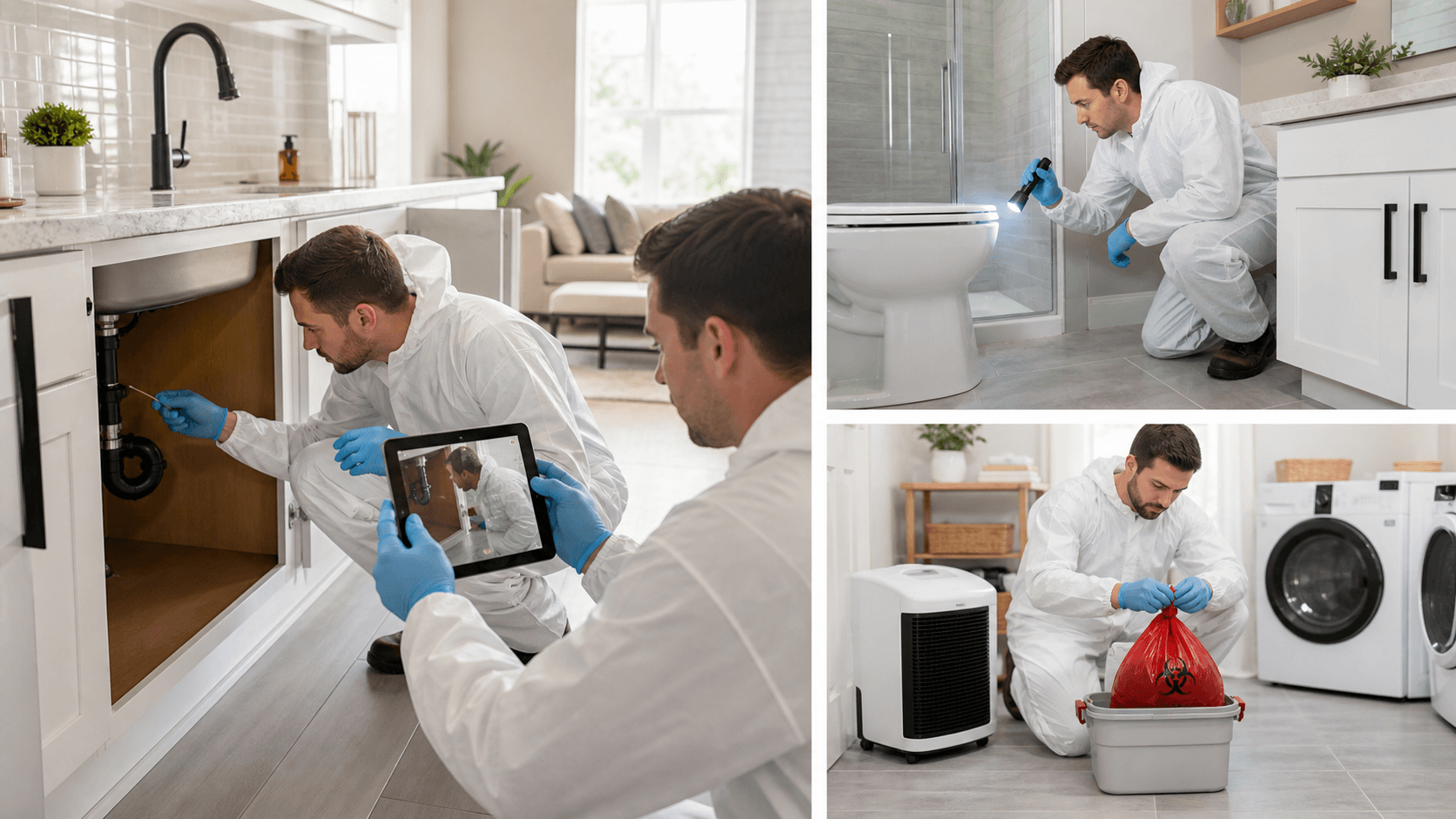
Under sinks and inside cabinets, watch for:
- Rodent droppings, usually small dark pellets in corners or along the back
- Wet insulation or warped wood below pipes
- Reddish brown or black staining around plumbing holes or along caulk lines
- A sour, sewer, or urine smell when you open the door
Behind and around toilets, check:
- Floor caulk and seams for dark rings or staining that will not wipe away
- Wall corners beside the toilet for spots of dried splatter
- Supply lines and shutoff valves for drip marks and corrosion
- The base of the toilet for staining that may be old urine, fecal matter, or blood
A simple, small spill on a tile floor that you notice right away is one thing. Long-term leaks, sewage backups, or bodily fluids that seep into grout, drywall, or subflooring are another story.
Treat it as a professional issue when:
- There has been any sewage backup or toilet overflow that ran into cabinets, walls, or floors
- You see mold patches larger than a dinner plate, especially around plumbing
- You suspect bodily fluids have soaked into porous materials like wood, drywall, or subfloor
Those situations can spread bacteria and mold spores into the air and into adjacent rooms.
Bedrooms, Living Rooms, and Hoarding-Prone Spaces
Bedrooms and living rooms are where people spend a lot of time resting, healing from illness, and taking medications. That can leave behind hidden biohazards, especially when clutter builds up.
Under beds and behind furniture, check for:
- Used tissues, bandages, or old medical supplies
- Sharps containers or loose needles that should never be handled casually
- Dark stains on carpet or subfloor that were covered by rugs or furniture
- Strong odors that seem trapped under or behind pieces
Some rooms slowly slide toward hoarding. Warning signs include:
- Stacked trash bags, food containers, or plates
- Pet waste or litter that is not cleaned up right away
- Blocked HVAC vents or returns under piles of belongings
- Paths through clutter instead of clear floors
Warm weather and humidity can turn these piles into active biohazard zones full of bacteria, mold, and pests.
Clutter crosses the line into a professional cleanup need when you see:
- Large amounts of animal or human waste
- Strong, persistent odors that cling to your clothes or hair
- Visible maggots, flies, cockroaches, or other insects feeding on trash
- Mold spreading across walls, furniture, clothing, or cardboard
At that stage, it is not a normal spring cleaning project. It calls for structured, non-judgmental hoarding and biohazard remediation to protect everyone in the home.
HVAC Returns, Crawlspaces, and Utility Areas That Spread Risk
Your HVAC system can quietly carry contaminants to every room without you noticing. Utility areas and crawlspaces often hold the source.
For HVAC returns and ducts, watch for:
- Vent covers with thick dust stuck to a greasy or sticky film
- Rodent droppings or nesting material around or in returns
- Dark staining or rust spots around vents or in the duct interior you can see
- A musty or sour smell that blows out when the system turns on
In crawlspaces, basements, and attics, watch for:
- Standing water or damp dirt
- Strong sewage odors or sulfur smells
- Rodent or raccoon droppings along joists and ledges
- Bat guano, often powdery and crumbly, under roof lines
- Any hint that an animal died in a hidden spot, such as a sharp, sweet, decaying odor
Treat air and structural issues as serious biohazards when:
- Odors of mold, sewage, or a dead animal do not go away with normal airing out
- You see mold on joists, insulation, or HVAC components
- There is any contact with bat or rodent droppings
These are high-risk materials, and they call for professionals with protective gear, containment methods, and proper disposal.
Garages, Sheds, and Vehicles That Harbor Silent Biohazards
Garages and sheds often hold a mix of chemicals, old food, and animals looking for shelter. Vehicles and RVs are small, closed spaces, so contamination builds up fast.
In garages and sheds, inspect:
- Around stored chemicals and fuel where leaks may mix with organic waste
- Old refrigerators or freezers that may have lost power and spoiled
- Dark corners and boxes for signs of nesting, droppings, or dead animals
- Floor drains or low spots for standing, smelly water
In vehicles and recreational vehicles, check:
- Under seats and floor mats for old food, spills, or stains
- Trunks and cargo spaces that may have carried trash, medical supplies, or animals
- Upholstery and seat seams for spots from accidents or medical emergencies
- Any sour, metallic, or decomposition odor when doors are opened after sitting closed
DIY cleaning should stop when:
- You notice strong decomposition odors in a garage, shed, or vehicle
- You see visible bodily fluids on porous upholstery or in hard-to-reach seams
- Contamination appears mixed with chemicals, fuel, or unknown substances
Working in these tight, poorly ventilated spaces with biohazards is unsafe without training and proper equipment. Professional biohazard cleanup teams are trained to handle these situations so the spaces can be used safely again.
Protect Your Property With Fast, Professional Cleanup Today
When a hazardous incident happens, you need a trusted local team that can respond quickly and handle every detail safely. At Hazwash LLC, we follow strict protocols to remove contaminants, protect your property, and restore peace of mind. Learn more about our comprehensive biohazard cleanup services and let us help you move forward safely and confidently.