
When an Eviction Reveals a Health Hazard
When a tenant leaves after a hard eviction, the mess is often more than just trash and old furniture. Landlords and property managers in Metro Detroit sometimes walk into units with human waste on floors, spoiled food in the kitchen, needles on counters, and pests hiding in every corner. It is upsetting, stressful, and it can quickly become a health emergency.
Human waste left in a rental is not just gross. It can create serious health risks, damage the structure of the property, and raise legal questions about when the unit is safe to rent again. Odors, stains, and contamination can spread far past what you see on the surface.
At Hazwash LLC, we focus on biohazard and hazmat cleaning in Metro Detroit, so we see how bad these situations can get when they are not handled correctly. As spring and early summer move-out season picks up and more evictions happen, being ready with a clear plan for human waste removal can protect your building, your staff, and your next tenants.
Hidden Dangers of Human Waste Left in a Rental
When urine and feces sit inside a property, they do not just dry out and disappear. They can soak into soft surfaces and stay active for a long time. That includes:
- Bacteria like E. coli and Salmonella
- Viruses and other germs that spread sickness
- Parasites from waste that get into dust and air
- Extra moisture that helps mold grow behind walls and under floors
Carpet, padding, wood, drywall, and even ductwork can hold on to contamination. A strong odor is more than a bad smell. It is a sign that tiny particles are still in the air and on surfaces. In multi-family buildings, those odors and particles can move through shared walls, hallways, and vents, affecting neighbors who had nothing to do with the original problem.
Over time, urine can break down flooring and subfloors. You might see:
- Black or dark-stained wood
- Soft or sagging areas under carpet or tile
- Swollen baseboards or crumbling drywall
- Rusted metal fixtures or floor vents
This kind of damage often costs much more to fix if it sits for weeks or months. A proper plan for human waste removal and decontamination helps stop damage before it spreads and keeps repairs focused on what truly needs to be removed.
Why DIY Human Waste Removal Can Backfire
When stressed and short on time, it can be tempting to grab bleach, a mop, and a carpet cleaner and try to handle the mess on your own. The problem is that basic cleaning tools are not made for this level of contamination.
Common DIY efforts can cause more problems, such as:
- Pushing urine and waste deeper into carpet pads and subfloors
- Spreading contamination from room to room with mops or vacuums
- Mixing cleaners in ways that create harsh fumes
- Leaving hidden pockets of bacteria that keep odors coming back
There is also a real risk to personal safety. Landlords, maintenance staff, and cleaners can be exposed to:
- Pathogens in waste, blood, and sharp items
- Hidden needles in piles of trash or clothing
- Cross-contamination into work trucks, offices, and homes
- Inadequate gloves, masks, and other protective gear
On top of that, if a future tenant gets sick or complains about odors and health issues, there could be questions about whether the cleanup met local health, housing, or workplace expectations. Professional human waste removal follows specific steps for safety, cleaning, and disposal that DIY methods usually cannot match.
Professional Cleanup Standards Landlords Should Expect
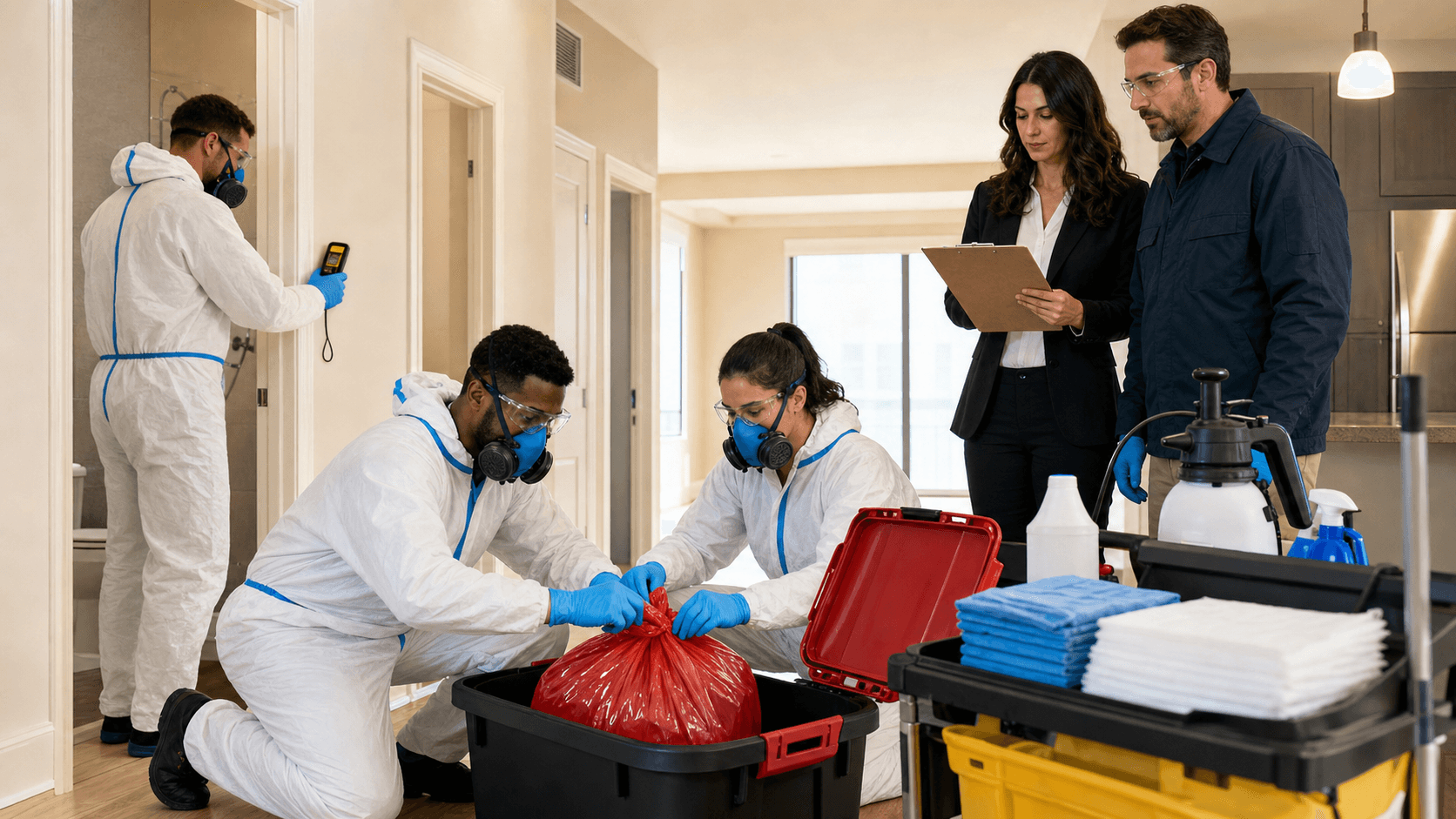
When a trained biohazard crew arrives, the work starts long before any scrubbing. The first step is always a careful assessment of the scene. The team looks for where human waste is visible and where it may have soaked in or spread. Then they set up containment to keep clean areas from being exposed.
A typical professional process for human waste removal and decontamination may include:
- Isolating the affected rooms or units
- Removing heavily contaminated items that cannot be saved
- Deep cleaning of surfaces, corners, and hard-to-reach spots
- Targeted disinfection with products meant for biohazards
- Odor removal that deals with the source, not just covers smells
After cleanup, many properties benefit from some type of verification that the area is safe to re-enter and re-rent. Detailed documentation is a big part of this. You should expect:
- Photos before, during, and after work
- Notes on what was removed and what was treated
- Itemized descriptions of services performed
These records can help support insurance claims, answer questions from city inspectors, and clear up future disputes with tenants. Companies like ours also understand the need for privacy. Discreet service helps protect tenant dignity and your building’s reputation with neighbors and the community.
Seasonal Turnover, Legal Duties, and Tenant Safety
Spring and early summer often bring a wave of move-outs and new leases in Metro Detroit. With higher turnover, the chances of walking into a rental with abandoned waste, hoarding conditions, or other hazards also rise. When that happens, time matters.
Property owners and managers have a duty to provide units that are safe and sanitary. That means acting quickly when you find human waste, sharp objects, or strong odors that could impact air quality. Even when a previous tenant caused the problem, the responsibility to fix it usually falls on the landlord before the next person moves in.
Thorough human waste removal is not only about staying on the right side of rules and inspections. It also helps:
- Protect long-term tenant health and comfort
- Reduce complaints and repeat service calls
- Prevent issues with pests that feed on waste and trash
- Keep common areas and neighboring units from being affected
Many properties are finding it helpful to build a biohazard response plan into their regular turnover steps. That way, when a unit is flagged as more than a standard cleanout, everyone knows what to do and who to call before leasing season gets busy.
Protect Your Property with a Ready-to-Use Cleanup Plan
When human waste is discovered after an eviction, the first few decisions can shape everything that comes next. A simple checklist can keep you and your team safe:
- Stop work in the area and limit foot traffic
- Do not start scrubbing or vacuuming on your own
- Avoid dragging contaminated items through halls or elevators
- Document what you see with notes and photos
- Contact a professional biohazard cleaner for guidance
Pre-vetting a trusted Metro Detroit biohazard cleaning partner before you need one can save a lot of stress during peak move-out season. When you already know who to call, you can move from shock and frustration to action much faster.
At Hazwash LLC, we focus on fast, discreet help for properties facing human waste, blood, odors, hoarding, and other hazardous conditions. Having a clear, professional plan in place before the next eviction or sudden vacancy helps protect your building, your team, and the people who call your units home.
Restore Safety And Comfort In Your Property Today
If you are dealing with a biohazard situation, our trained team at Hazwash LLC is ready to respond quickly and discreetly. We use professional-grade equipment and strict safety protocols to ensure thorough human waste removal that protects your health and property. Reach out now so we can assess your situation, explain your options, and schedule fast service. Let us handle the hazardous cleanup so you can focus on getting life back to normal.